The Ramen Champ
Unexpected kindness in a food court.

Above is a recording of this piece read by the author.
During this dark moment (January 2026), I wanted to share a memory of kindness from my first days in Los Angeles eight years ago:
You know when you move to a big city for the first time? And you got some plans and ambitions and aspirations. When I moved to Los Angeles, I felt that I was going places. And I assumed that my journey would be charmed—that the city would open itself up to me exactly as I expected, and I would be able to just waltz without obstacle towards my dreams.
I was working on a project at the time that brought me out from Los Angeles to New York. A big, exciting television-writing project. And one afternoon early on in my time in LA, I had a meeting scheduled—a big, exciting meeting—for that project. I had that adrenal feeling, that Eminem-“Mom’s spaghetti”-Jay-Z kind of pulse-thumping feeling, like, I’m going to have this meeting! Man, I put a lot onto this meeting. This meeting was where everything was going to happen for me.
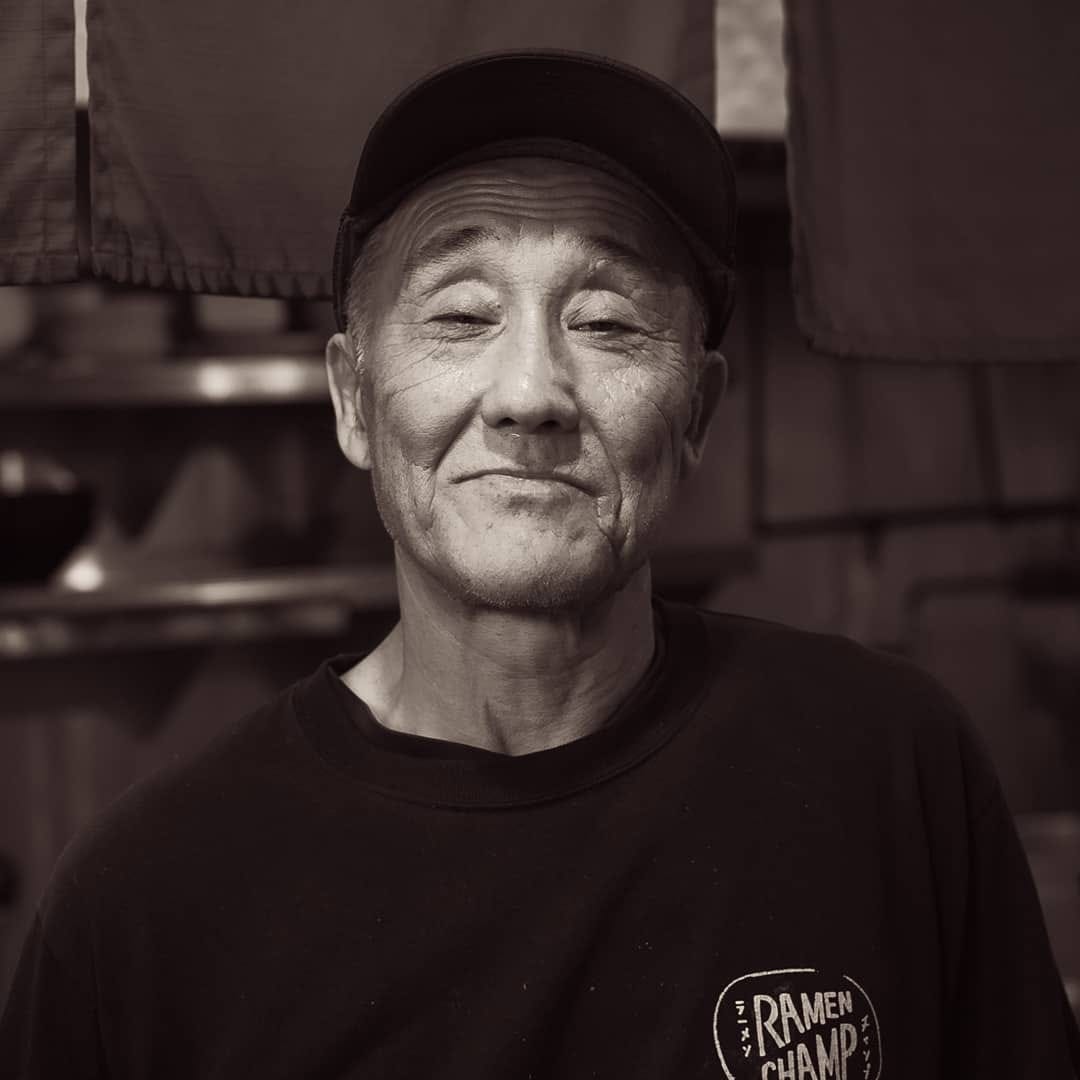
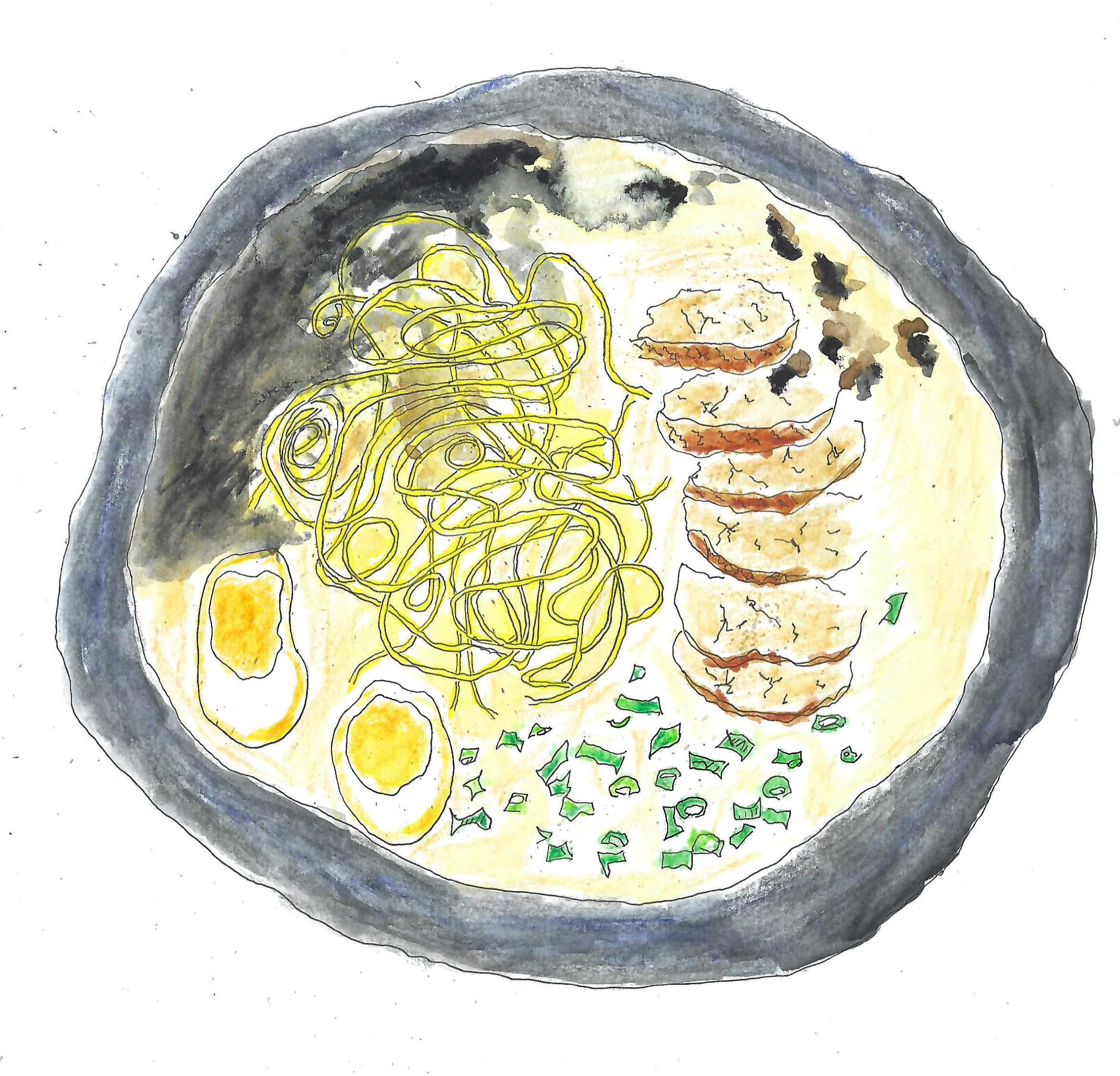
So, before the meeting, I needed to have lunch. And I was in this glow of excitement about Los Angeles like, New city! What does this place have to offer? I’ll go on a food adventure. I went to Chinatown and found this food court called Far East Plaza and in one corner was this little restaurant called Ramen Champ Tokyo Style. It was a very tiny space and it was filled with people. And there was this one guy there behind the counter, an older Japanese guy with one of those fat red trucker hats. He was doing everything: he was making all the ramen and serving all the customers and every time someone would walk in, he would give them that big traditional ramen greeting, “Irashaimase! Welcome! Come in!” from the Ramen Champ.
He’s ladling bowls of steaming broth, and he’s sautéing the pork, and he’s heaping the portions of noodles, he’s slicing and dicing and doing everything. And I ordered the ramen and I was eating the ramen in this hustle and bustle, on a food adventure in a new city, about to have my meeting. And while I was at lunch—my meeting was canceled.
Now, I was so focused on this meeting I hadn’t planned anything else—cleared my schedule. That was going to be my whole day. It didn’t even occur to me that such a meeting could not take place—or thousands of meetings like it could not take place every single day in Los Angeles. So I was disheartened and I went into a tailspin emotional crash. I didn’t know what to do with myself and I was sitting there in the midst of this bustle and I put on a podcast and I was listening and—very slowly—finishing the ramen.
Basically I kind of just skulked at that ramen counter as people finished their lunches and got up and I skulked like that until the entire lunch service was over. The last customer besides me had left. It was just me and the Ramen Champ. He’s starting to wind down the service, and then the vibe in there changes and suddenly it goes from, “This is a lunch hotspot” to a “Lonely Hearts at the Diner” moment. Just Alexander sitting there with the Ramen Champ
And he started to wipe down some of the tables, and I’m in there like, What am I doing? So disappointed. I’m lost. That violent “I’m excited! I’m excited! Now I’m in a trough!” up and down, pleasure and pain, gain and loss. And eventually the Ramen Champ came out from behind the counter and started to walk over to me. And I was like, He’s going to ask me to leave. The Ramen Champ can tell I’m not a champ right now. It’s closing time. You don’t have to go home but you can’t stay here.
I braced myself. And instead, he walked over and without saying a word, he just lifted up one of his big mitt hands and he put it on my shoulder. Total silence. Just came over, put this hand on my shoulder, kind of squeezed it a little, patted it, and then went back to cleaning his restaurant. Didn’t say anything.
And my whole body shifted from that gesture of kindness. Kindness between strangers, urban setting, across a language barrier. He had no idea what was going on but there’s a certain universal vibe of somebody who needs a little, “I got you, buddy. The universe has got you. Whatever it is, it’s gonna be OK.” This physical transmission from the Ramen Champ through my shoulder, radiating through my body. I’ve n
ever forgotten that exchange of kindness, so unlikely, so moving, so simple.
I looked up kindness to learn where the word came from. It’s related to “kind” as in “my kind of thing,” and also “kin.” It has a quality of “natural, native, or innate,” and that grew into the sense of “the feeling that relatives or kin have for each other.” That helped me to a definition of kindness I find helpful: kindness is how you’re treated when you belong. Kindness is how we show each other, “You’re my kind. We’re in a human—also non-human—kinship.”
I found it revelatory to learn about the biology of compassion, related to the sense of kinship. So, the biological strategy of fish and reptiles is to produce lots of eggs and lots of babies. And the young have to disperse rapidly as soon as they’re born to avoid being eaten. Sometimes it even means being eaten by their own parents (maybe some of us can identify with that, amirite? — but it’s mostly a reptile quality). The reptile babies are mobile, they seek their own protection, and from the jump they go out to take care of themselves.
But in order to evolve into mammals, creatures had to develop certain traits: warm-bloodedness, offspring living from the time of birth, small numbers of young, and huge parental caregiving investment in the little beings. In order for that to happen evolutionarily, there had to be new physiology developed so that the avoid-approach response of reptiles could be mediated into interpersonal contact and connection. So we developed the parasympathetic nervous system, the rest-and-digest response. The body at rest becomes open to physical contact with other beings, starting with those taking care of us. The mammalian body learned to trust a safe haven of care so that the extra development that takes place outside the womb could be safe and facilitated. And one of these qualities of the extra investment is sensitivity to distress and a preparedness to act to appropriately to relieve that distress, which sounds a lot like compassion.
It’s this core of compassion in our history as a species that gets activated when someone puts his big hand on your shoulder. And when we offer ourselves compassion, it’s traveling the same evolved physiological pathways as that basic caring behavior that the mammals developed. There is this amazing thing where, even if the mind thinks, “No no no, it’s not going to work, it’s not for me, I can’t use my intellect to imagine it,” these pathways are thousands of years old in the body and the body remembers that evolutionary story and the body knows these pathways signal care. They signal, “I see you’re in distress and I want to alleviate that for you.” This is why kind physical gestures have such power: we can be the Ramen Champ to our own experience.
During Covid, the Ramen Champ went out of business and so who knows where he is and on whose shoulder he’s laying his hand right now. But that one unexpected gesture of kindness caught me when I was swan-diving into despair and reminded my body I was part of the pack.